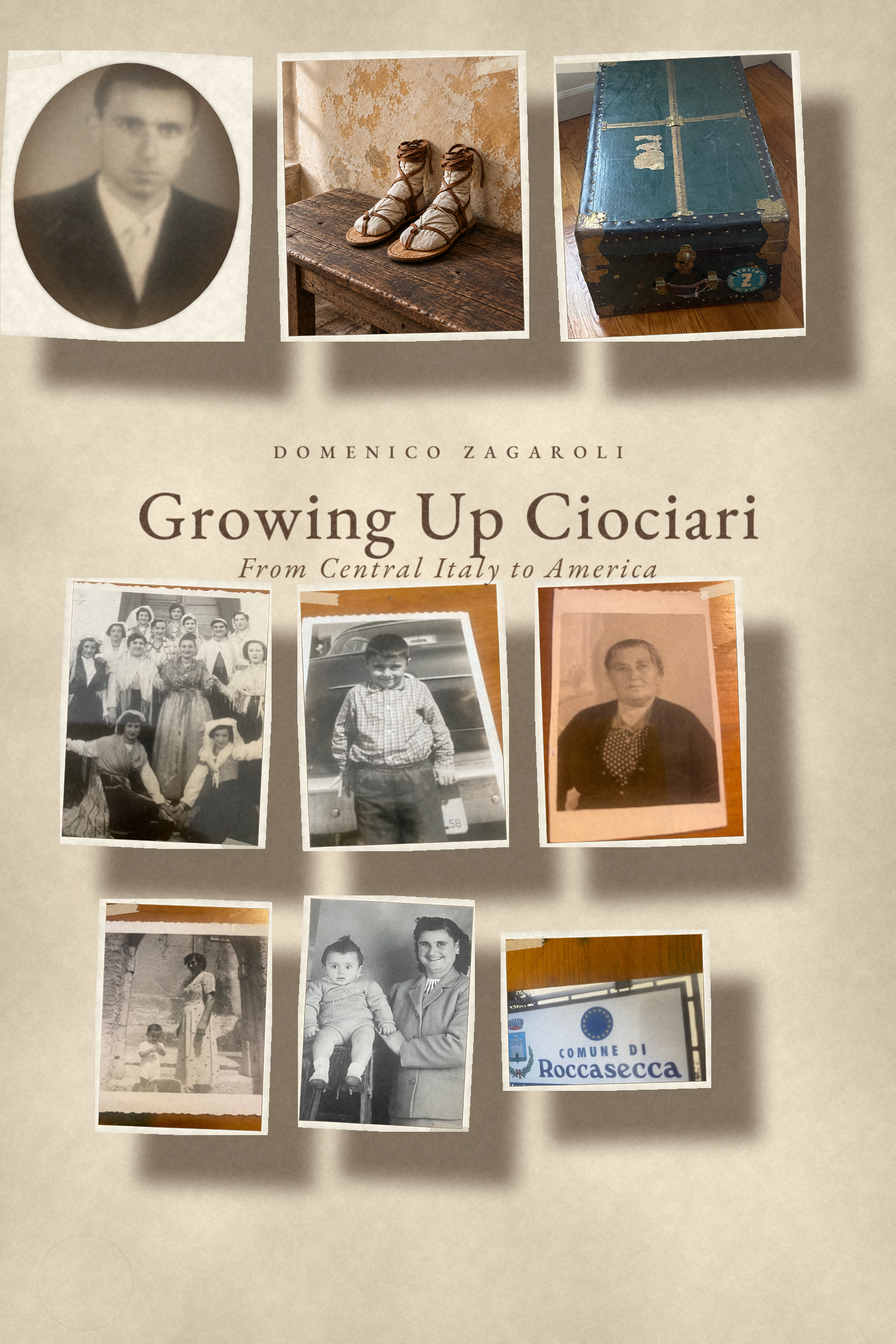
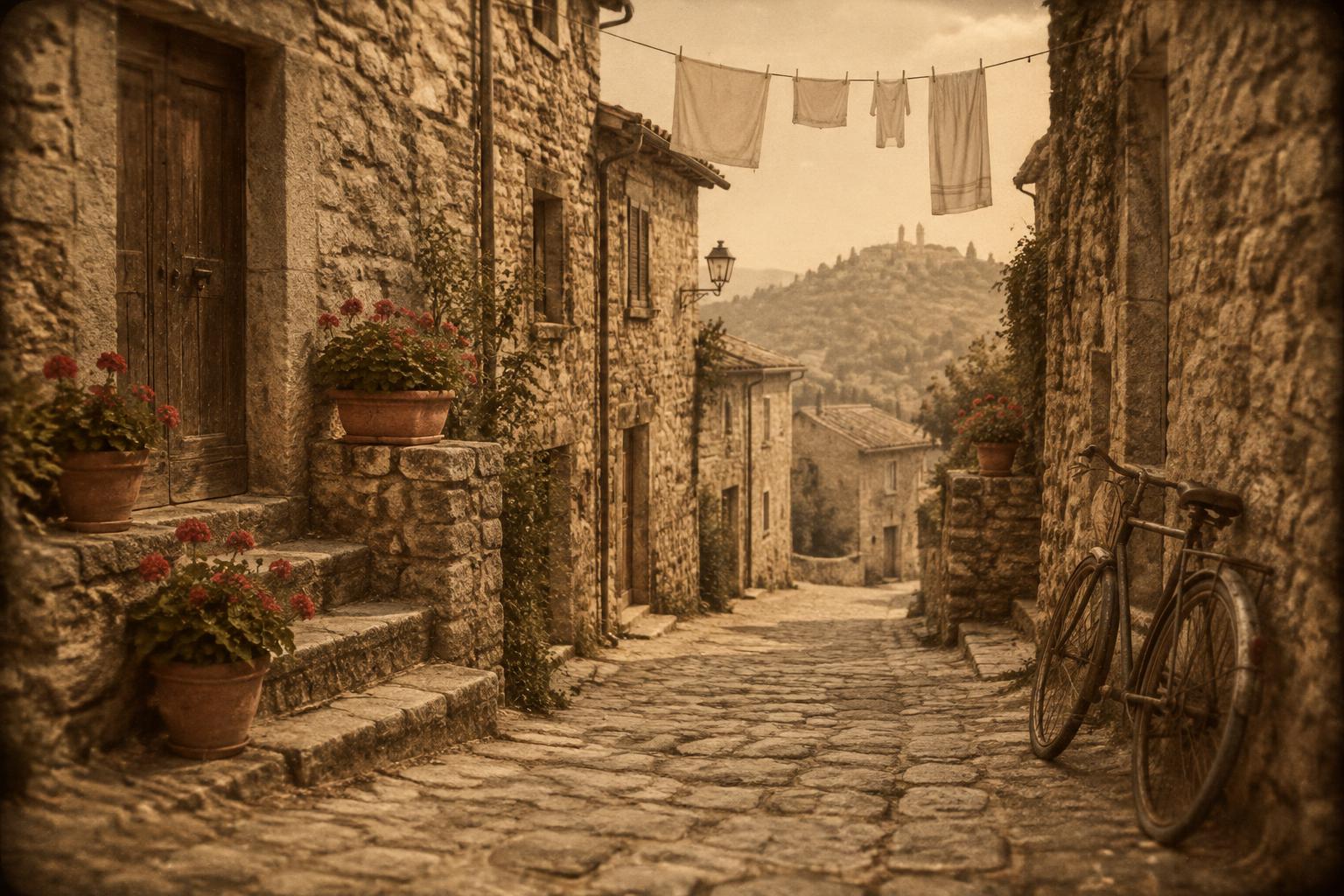
Before there were roads wide enough for two cars, before the young men left for Argentina and Ohio and Detroit, there was a village on a hill and a life measured by the olive harvest, the feast day, and the sound of a bell carrying across the valley. Growing Up Ciociari is Domenico Zagaroli’s account of that life — the Ciociaria of his childhood, in the hills southeast of Rome — and of what it cost, and what it gave, to leave it behind.
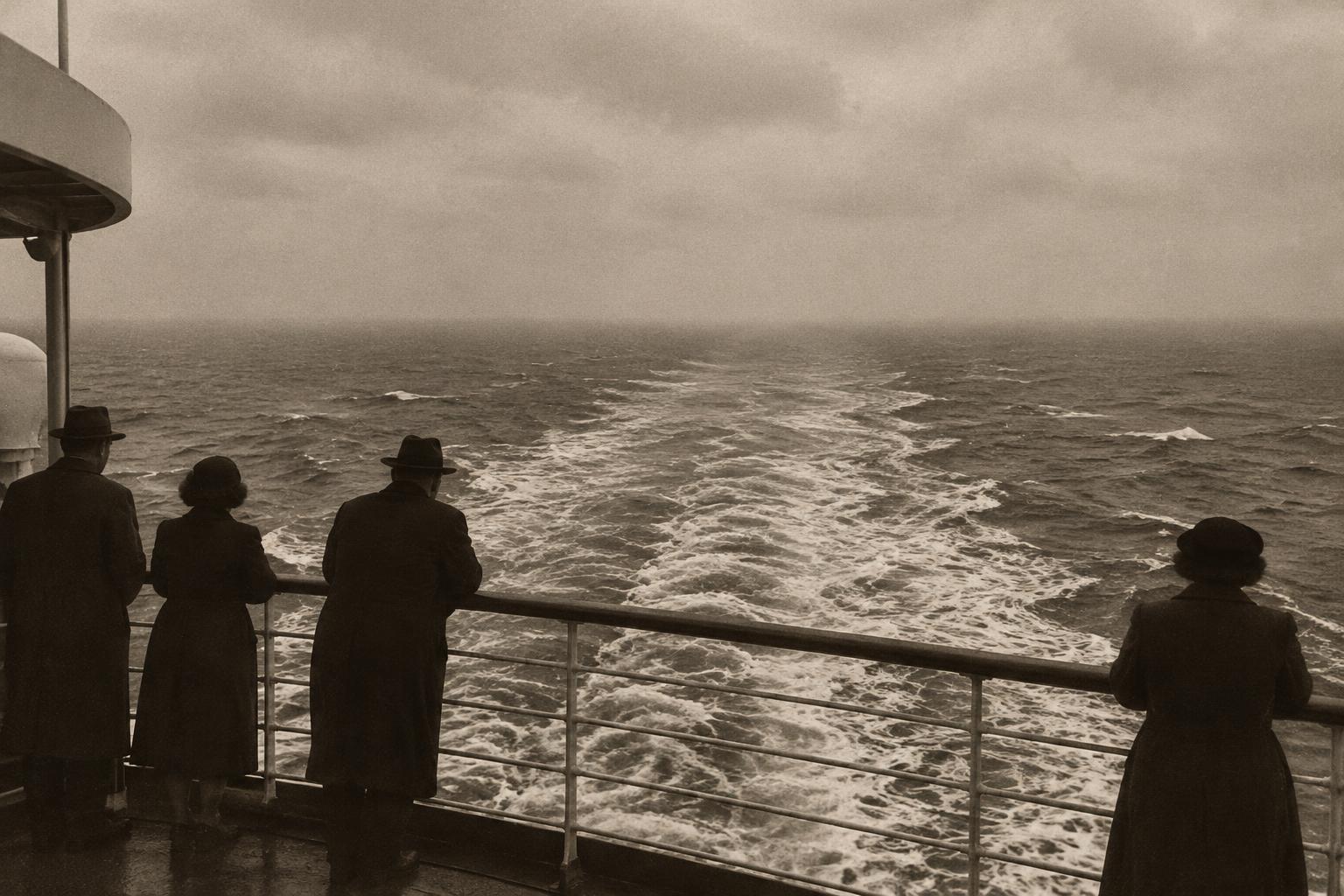
These are not the recollections of a famous man. They are the ordinary, exact details that a boy carries for seventy years: the taste of bread baked once a week, the work of hands, the way a mother packed a household into trunks, the dialect words that had no English waiting for them. Then the crossing of 1958 — the ship, the long water, the first sight of a harbor that was not the one he left.
It is a memoir about emigration as it was actually lived: not a grand narrative, but a family deciding, in one season, to trade everything familiar for a chance at something steadier. And it is a record of a place — Ciociaria — kept the way the people who left it kept it: in memory, at the table, in stories told again at every gathering.
A book about a place that emptied itself into the world, told by one of the people who left it.