The country in the title
Ciociaria
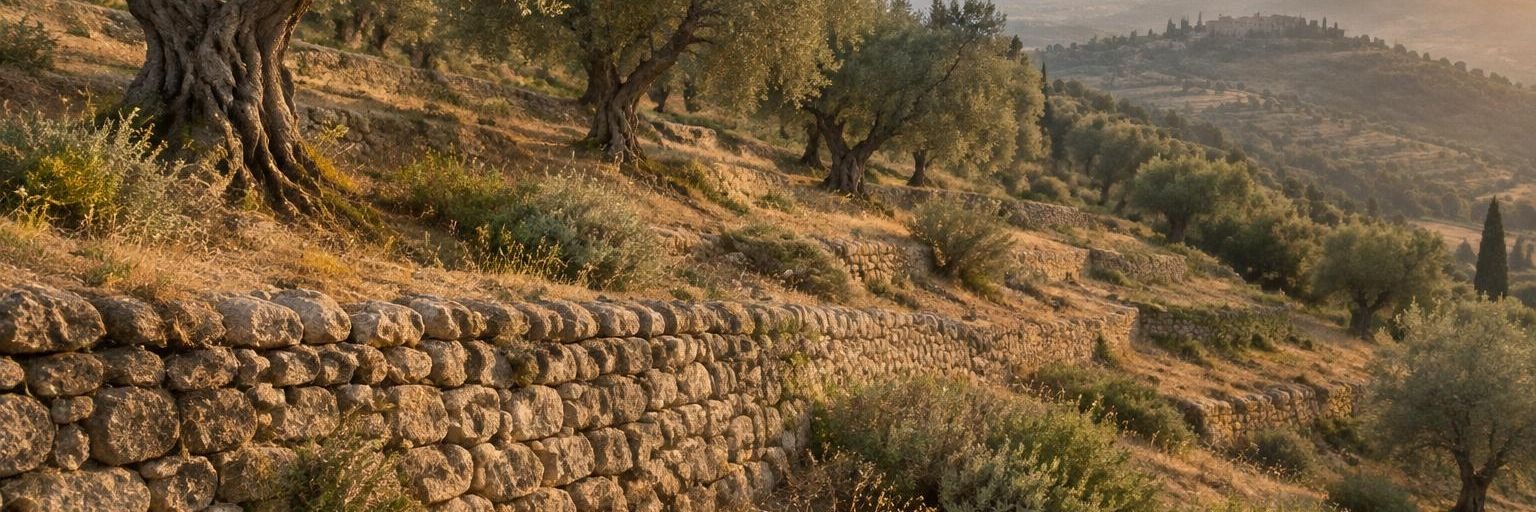
The hills southeast of Rome, where the memoir begins — a place defined less by borders than by the way people lived in it.
Ciociaria has no neat boundary. It is the name people gave to the inland hill country of southern Lazio — the province of Frosinone and the valleys and ridges around it — and it was always as much a culture as a place. The ciocie gave the name: the laced leather footwear that farmers and shepherds wore, wrapped up the leg with cord, made to survive mud and stone.
To grow up there in the middle of the last century was to grow up inside a very old arrangement. The village sat on its hill; the fields lay below in terraces held by walls built without mortar; the olives were picked by hand and pressed nearby; the wheat was cut and taken to a shared threshing floor. Houses were cold in winter and the kitchen was the warm room. Meat came at feast days. Bread was a weekly event.
Because the land could only be divided so many times, and because the war had left little behind but hunger and habit, the young left. First the men, seasonally, then whole families. By the 1950s entire streets of some hill towns stood empty of anyone between twenty and forty. The Ciociari became one of Italy’s great emigrant peoples, and their villages became places people returned to in August and wrote letters home about the rest of the year.
In brief
- The name
- It comes from the ciocie — the ancient laced leather footwear worn by shepherds and farmers across these hills. The people were called Ciociari because of the shoes on their feet.
- The land
- Roughly the countryside around Frosinone, southeast of Rome: limestone ridges, river valleys, olive groves on terraces held up by dry stone walls, and villages built high for defense and cool air.
- The speech
- The Ciociaro dialect, not standard Italian, was the language of the kitchen and the fields. Many who left carried the dialect with them and never fully replaced it.
- The leaving
- After the Second World War, poverty and land hunger drove one of the largest emigrations in the region’s history — to Argentina, France, Belgium, Canada, Australia and the United States.
What the book keeps of it
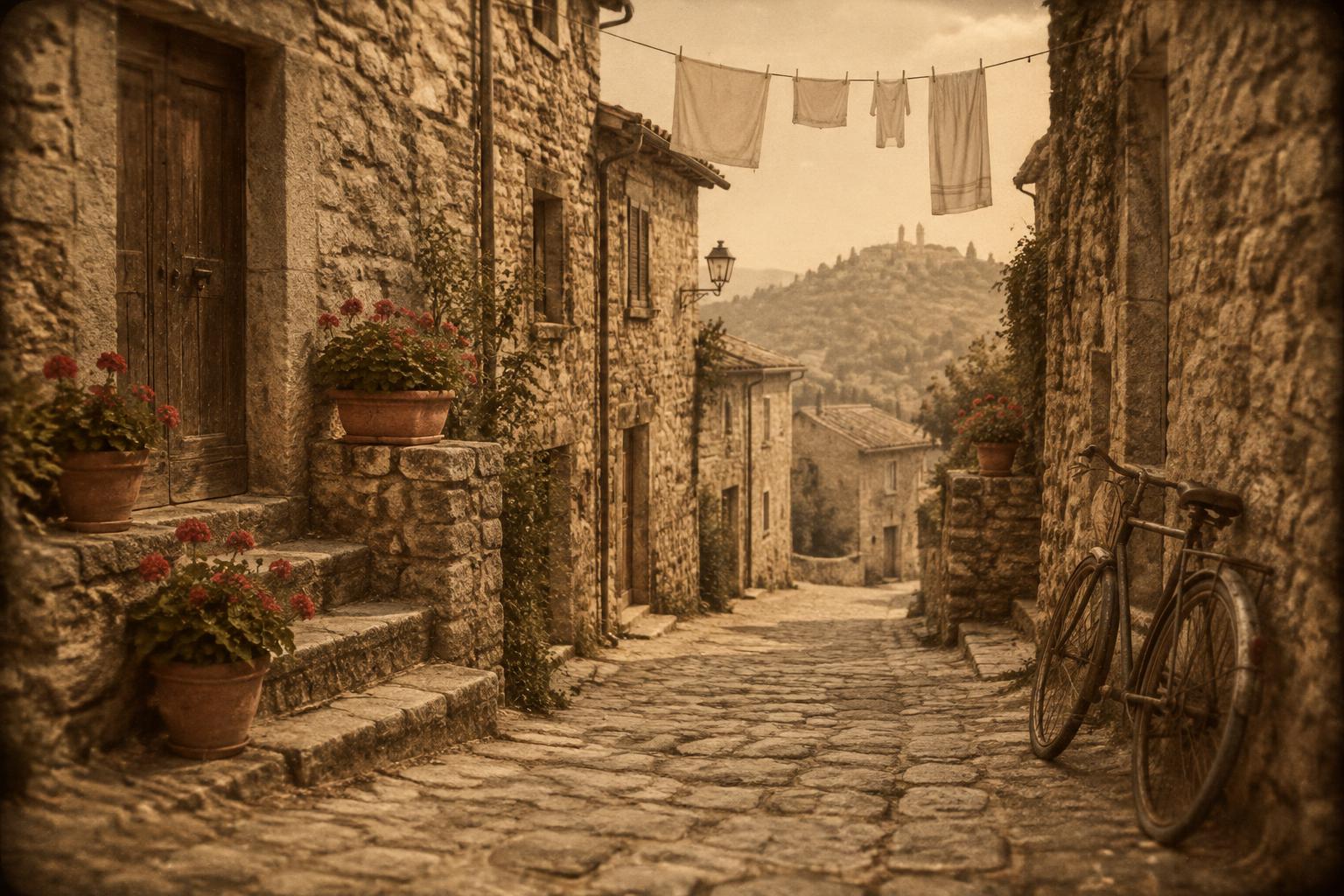
Not the postcard version. The memoir is interested in the work, the food, the crowded rooms, the politics of a small town where everyone was related and no one was rich. The details a boy would actually have noticed: who had a radio, whose father had gone to America already, where the water came from, and what was said at the table when a letter arrived with a dollar in it.
Those details are also why the book is being read outside the family: they belong to anyone whose people left somewhere.
About the bookIs your family from Ciociaria?
Domenico would like to hear from you — especially if you have a photograph, a surname, or a story that belongs in the same drawer as his.